What Is Spray Foam Insulation?
Spray foam insulation is a high-performance material made from a combination of isocyanate and polyol resin. When these two components are mixed and sprayed on during installation, they react to form a durable, expanding foam. Applied as a liquid, spray foam quickly fills the gaps, cracks, and cavities in your building envelope to create an airtight and moisture-resistant seal. It insulates and air seals in a single step to help homes and buildings stay comfortable and energy efficient year-round.
There are two types of spray foam insulation:

Open-cell spray foam is less dense. It has a softer texture and an R-value of 3.8 per inch. It is ideal for interior walls and some attic applications where sound dampening and breathability are desired.
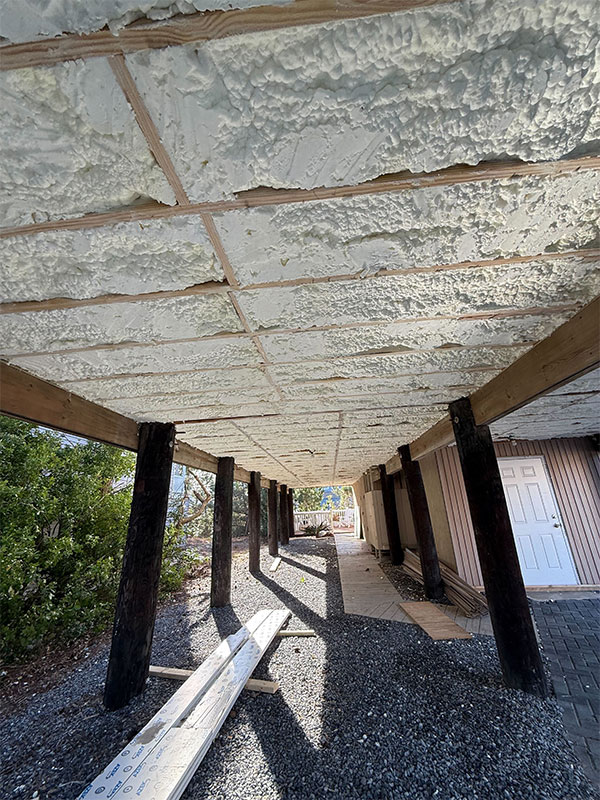
Closed-cell spray foam is denser and more rigid. It has a higher R-value of 7.2 per inch. It also acts as a moisture barrier and adds structural strength, making it the best choice for crawl spaces, exterior walls, and unvented attic rooflines.
The Benefits of Spray Foam
Spray foam offers several long-lasting benefits that go beyond what traditional insulation can deliver:
How Spray Foam Compares to Other Insulation Types
When compared to traditional insulation materials like fiberglass or cellulose, spray foam insulation offers a more comprehensive solution. While fiberglass is more affordable upfront, it has a lower R-value (typically R-2.2 to R-2.7 per inch) and can lose its effectiveness if it gets wet or compressed. Cellulose has a slightly higher R-value of R-3.2 to R-3.8 per inch but is also prone to moisture absorption and settling over time.
Spray foam’s higher R-value, combined with its ability to seal air leaks, provides superior energy efficiency and long-term performance. Though spray foam is a greater upfront investment, it is often the more cost-effective choice in the long run.
Where Spray Foam Works Best
Spray foam can be applied in many areas of your home or commercial building. Some of the most effective areas include:
Why Spray Foam Is Ideal for Delaware’s Climate
Delaware’s mixed humid climate of hot, humid summers and cold, damp winters necessitates a versatile insulation. Spray foam insulation offers the airtight seal and thermal resistance needed to protect your home or building in every season. Closed-cell foam also offers a powerful vapor barrier to keep out moisture and help prevent condensation and mold growth. It outperforms fiberglass and cellulose, which can absorb moisture, settle, or allow air leaks that compromise energy efficiency.
Spray foam helps maintain consistent indoor temperatures and significantly cuts down on heating and cooling costs. This frequently makes it the best insulation choice for Delaware homes and buildings.
Why Choose Delmarva Spray Foam
Since 2002, Delmarva Spray Foam has been trusted by homeowners, national builders, and local contractors alike. We install high-quality spray foam insulation in new construction, existing homes, and commercial buildings throughout Delaware and the Delmarva Peninsula. You can count on our twenty plus years of spray foam experience to ensure your project is completed safely, efficiently, and on time.
Get Started with Quality Spray Foam Today
Ready to insulate your home or building with high-performance spray foam? Contact us today to schedule a free estimate and learn how our spray foam solutions can improve your comfort, efficiency, and peace of mind.